Secure AI
5 questions every CTO must answer about AI agents

Miguel Nunes
Cloudflare
You might have heard statements like "70% of Internet traffic passes through Northern Virginia" or that satellite communications are how intercontinental communication happens. Would it surprise you that neither of those statements is true? This talk dives into the depths of how Internet infrastructure is all around you, what actually carries your Internet traffic, and how a network like Cloudflare is perfectly suited for the evolving demands of Internet infrastructure with AI.
0:03My name is Tom Paseker. I'll just give another minute for people coming in to sit down. But I've spent pretty much my entire career over multiple decades building internet infrastructure. And so I wanted a really entry -level discussion on how the internet really works. Make sure this works. There we go. The internet starts in your hand when you take out your... phone you tap your glass tap the glass on the front of your phone where does it go um a lot of people think uh it's just wi -fi it all just works through through wi -fi you'll often hear people the younger generation say i need a wi -fi cable which is a really interesting concept for me because how is it a cable if it's wi -fi um so where did it go you tap your device goes radio across the wi-fi of course goes to building network so in this building if you look up to the the roof you can see right there there's an access point so when you're connected to wi -fi there's one there there's another one there and more at the back as well um that's what your phone is speaking to if you're on the wi -fi network if you're on the cellular network uh there's small cells in this room i don't see any but there's probably some just outside um and so it needs to connect to something and from that there are cables that it then connects into out to your internet provider and off to large network um it's a physical journey um so again we're not just talking about why like wi -fi and radio signals uh there's a physical foundation of it um a lot of civil
1:38engineering that happens hiding in plain sight um and this is where you can get into really fun stuff
1:45so radios inside like i mentioned um this uh this picture right here is a small cell um i believe this one is South Korea. You'll see these across buildings, especially in Asia, they do a lot of densification of their cellular networks. They put these, it's effectively like a Wi-Fi hotspot, but they sit them inside the building so you can get better cell signal. These are some other examples of the cellular networks. So, oops, sorry, can I go back one slide?
2:15Sorry. Sorry, can I go back one slide? Thank you. i pushed the wrong button um this one here is is in san francisco it is in the sunset district um that's a cell phone tower built on top of a power tower on a power power line it looks pretty ugly um but it's there it's visible and you can even see all of the cables coming in and out of it that's what's making it run connecting to the rest of the internet the picture on the right is in vietnam where they look for very very dense uh cellular networks so they actually set these up all along the roadside. So you can see Vietel 5G. There's about a dozen of these in a few blocks. They're really making sure that you have a good radio signal. And these red parts is actually the radio antennas there. So all of this is visible. Sometimes it isn't.
3:07So this is a great example that especially happens here in the United States is people want to make the cell phone towers less visible. And so you'll drive around and you'll see something it looks like a pine tree but it's actually a cell tower they spray paint those leaves onto it and kind of hide it these are actually pretty common i know of at least a dozen locations here in the bay area where they have beautified cell towers like this
3:36but it's also under your feet so when you walk around here especially in the united states you'll see this very often These are from in my neighborhood. You see these spray paints on the road and you think, what's this? They're preparing for doing construction. These two ones here, when it's an orange marker like this, if you can read the letters on it, it says MCI. Does anyone know what MCI is? I got these three here, but anyone else?
4:05So MCI is the old name for Verizon. That is their fiber there. And then you can see on top of it, there's L3, which is level. which is now lumen um and so this is marking when they're doing construction work there's fiber going through this path here that's where their conduit is that's what your cell phone's connecting to eventually it's connecting through things going through those lines so if you're using a verizon cell your data is traversing that that buried line there at some point in its journey but there are a lot of these um there are all different sizes and scales you can see this is a much larger one this is a sprint one Sprint is a network that no longer exists. The fiber network is now owned by Cogent Communications. But they're a longtime company built next to the railroads and with the railroads and have a very large fiber network.
4:57Here as well, you can see AT&T buried cables. So someone was doing construction, they requested it to go out there and mark where the cable is. And so they made sure that it doesn't get impacted by construction works. um you get a special picture there with my dog um there he is his name is toto but here you can see again more construction here but in this case they're saying there's no mci there's no bry no zeo no crc no ext so all of these different carriers are not in this space of the mark that they're preparing to do construction in and on the right hand side this is where it can get really messy um this is an example in indonesia um where typically the don't actually bury the fiber like you have on the left side in Lynn and a lot of other countries it's just laying on top of the sidewalk sometimes it's not even protected so you can see the conduit is broken and it's not very clear but the fiber is there hanging out of that conduit this isn't very stable but it is there under your feet the infrastructure is physical and it is it is there with you and so conduit sometimes protects the tubes it doesn't um that previous picture was a great example of that but fiber carries light um i have a prop and so i'll ask for for two people from the audience if they can step up if anyone wants to i'm going to pick on june and noah sorry guys
6:29so grab it in the middle so this is a typical fiber line. This is a single mode fiber. This is what carries most traffic on the internet, this type of fiber. And it's very easy to recognize when it's happening. When I'm sending a light through it, you can see it flashing on June's hand and reflecting out of there. It looks very simple. Light just goes through the tube. Sometimes you may get bends and it may not be very clear, but you can see the light starting to escape when it's bent too much. These things can be very fragile. as well if you see the the light flashing there with june that has disconnected it that's as simple as the fiber is this is effectively the same things that run under the ocean that run under the streets that is carrying all of your internet traffic from your phone to the internet thank you both have a prize for participation too Noah right thank you
7:32So, light does the long-distance work, as we've just seen. This is just an example across two meters, a meter and a half of fiber distance. But that same principle works for thousands of miles. If you're going from here on the West Coast, there are cables that go all the way to Asia, to Australia. They shoot a light beam just like that, a little bit more powerful, but it's the same the way through in a single plane of glass light is what carries it i have an example here that i'll show and you can come up after the session this is a submarine cable a segment of one the exact same technology that we see there but there's a lot of interesting bits to this here
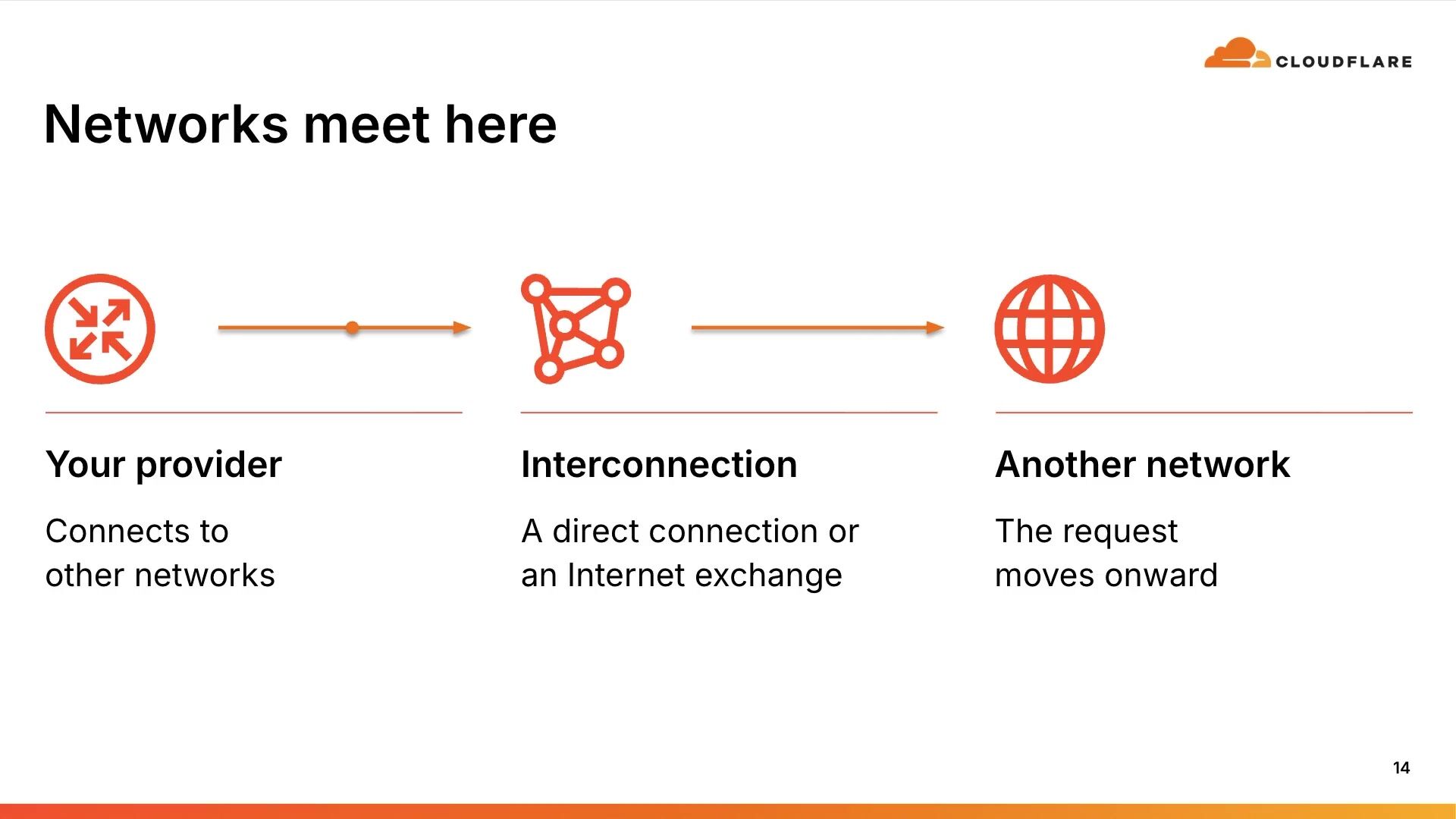
8:21so continuing through when you think of the cloud becomes a very nebulous term, doesn't really have a definition. You think the cloud could be up there, it could be anywhere, but the cloud actually has a street address. Who here is deployed in US East 1? Everyone who's a developer is probably deployed in US East 1 and runs things in US East 1. That's it. If you open Google Maps, go to Ashburn, Virginia, and you'll see a whole bunch that look like this it's even marked on google maps amazon us east one um it's there it's visible it has it has an address um the same is true with all internet services there is a physicality to them i just demonstrated the physicality of the fiber but communications live here the information the applications they all run in physical addresses um but how do you get there so your provider from your phone connecting to the wi -fi connecting through the fiber that i mentioned goes to your internet service provider there is a internet exchange or an interconnection agreement that will happen which is not dissimilar than than i had here you have your provider on one side another provider on the other and they they do that it's really that simple plug into each other the communications can continue through and the request goes on
9:51um this is an example of another building where this type of interconnection and meeting of networks happens this is uh i believe this is the equinix campus in ashburn as well so if you can find us east one it's about half a mile away from us east one and you can see equinix dc ibx this is a a very big interconnection hub in the region um there are thousands of networks inside that building thousands or tens of thousands of those cables plugging in between them, continuing the communication. There is no center of the internet. Sorry, the black slide doesn't work very well there, but you can vision the continents out of that. There is no one center of the internet. One of the big things that you'll often hear is that 70 % of the world's internet traffic traverses through Northern Virginia.
10:45the ashburn city council often says this i believe it's on their web page as well and a lot of that is just because of that equinex building that i just showed before as well as us east one being there and so there's a lot of concepts that hey internet traffic is all based there but that's a myth it is not true when you access the internet taking again from your phone going to the wi -fi almost all of your communications stay in the same city that you're in if you're in a major city going to be here let's say you're a little bit further outside sacramento it's probably coming down to the bay area but there's a lot still in sacramento as well um so the internet traffic doesn't go through there the internet itself is actually not designed to be able to bring enough traffic through there um it's a it's an interesting thing is that there's a very limited amount of this in the ground there simply isn't enough fiber to be able to carry all of the world's traffic to a single location um when you think of capacity wise, there's a lot of capacity going short distances.
11:41The further the distance you go, the capacity shrinks and shrinks and shrinks. Across an ocean. So this is really fun. Who here thinks their internet traffic goes through satellites? Unless you're using Starlink. Right. So today, practically no internet traffic uses satellites unless you're your last mile, your subscription service is something like Starlink. Intercontinental traffic is almost entirely delivered through submarine cables. There are a few island nations that don't have submarine cables and so they will often get satellite backlinks or those submarine cables may get test severed. But all of the traffic going long distance across the internet is really on fibers like this.
12:31It's a common myth that the satellites are required for that, but really it's fiber that's in the ground or or laying on the ground or underneath the oceans um 99 % of yeah so here is the statistic is 99 % of intercontinental data connectivity is via submarine cables um since the submarine cables have become so so relevant like it's just not viable to use satellites anymore for that volume of traffic um the satellites were really useful when voice calls were a thing um but who here makes phone calls anymore um the the other thing is just capacity is one cable like this when when you think about what it can do this can do a billion voice calls concurrently on this one cable um the satellite simply can't do that great um the internet is also not a fixed route this is another thing is as we said there are no hubs uh that everything has to run through and so everything can actually go different routes all the time we have tom here from cloudflare's network engineering team who spends a lot of time optimizing those different routes but there are many different corridors that the internet uses there is no one fixed place that it has to happen cloudflare's internet infrastructure is spread across so many of these different locations and we use lots of different routes for that traffic flow
14:04So why does a network like Cloudflare exist and how does this relate to what we've talked about the internet? So I gave you the journey between your device and Cloudflare, but there's a lot of reasons for why we exist and what we do. So who here knows how TCP works at a high level? Okay, that's great. That's way better than I expected. So you know what the three-way handshake is, right? Lots of heads nodding. doing a handshake so if I'm the client the communication server is over there I've got to walk make the communication go back do this get back there and then go back there again that that's the three-way handshake that happens and that can take a long time when you're talking across the world so if we use an example coming from Australia to U .S. East one in Virginia that's a very long way to go to make that communication three times before you can even start communicating so Annette like Cloudflare, we bring the handshake just to a very small distance.
14:58We're able to cache the data that's there and not need to extend it the whole distance through. From our nodes, we can optimize that long distance much better using that network that we've described with all of the physical infrastructure to make it quicker. And if all you're relying on is that short handshake, communications work much better.
15:27AI is obviously the hot topic now but it also has an address. It happens in those same buildings that we described. It happens even on your device. Everything still has a physical mode to it and the models all use that same infrastructure. This is where a network again like ours is hugely optimized. User to application is that very short path. The applications model to data and tools can go back. and forth across our network through those optimized paths you've probably heard a lot about workers workers ai ai gateway over your past time here so far all of this is running at all of those locations so that short handshake that we have inside your city is able to go much quicker you're able to get a better experience in general you can see the journey so this is a big thing when you go outside i want you to have a look at the internet infrastructure that's all around you from your device through the street through the networks that are visible and you can see everything else that's going on there
16:35so internet infrastructure isn't just somewhere else it isn't just in the cloud it's actually all around you and like i said i want you to step away and see what you can notice on your way home thank you very much
Miguel Nunes
Cloudflare
Matt Alonso
Cloudflare
Enrique Somoza
Cloudflare
Be the first to know when registration opens and the agenda goes live.
---
title: "How the Internet really works: Into the depths of Internet infrastructure"
url: "https://www.cloudflare.com/connect/2026/session/how-the-internet-really-works-into-the-depths-of-internet-infrastructure"
year: 2026
---

# How the Internet really works: Into the depths of Internet infrastructure

[Watch session](https://www.cloudflare.com/connect/2026/session/how-the-internet-really-works-into-the-depths-of-internet-infrastructure)

## Session details

- **Track:** Network & Infrastructure
- **Topics:** AI inference & workloads, Cost optimization, Network modernization & multicloud
- **Solution areas:** SASE & Workspace Security (Cloudflare One), Core Platform, Developer Platform, Consumer Services, Application Performance, Application Security, Network & Threat Services

## About this session

You might have heard statements like "70% of Internet traffic passes through Northern Virginia" or that satellite communications are how intercontinental communication happens. Would it surprise you that neither of those statements is true? This talk dives into the depths of how Internet infrastructure is all around you, what actually carries your Internet traffic, and how a network like Cloudflare is perfectly suited for the evolving demands of Internet infrastructure with AI.

## Speakers

- [Tom Paseka](https://www.cloudflare.com/connect/speakers/2457276) — Head of Technical Standards & Design, Cloudflare

## Transcript

[0:03] My name is Tom Paseker. I'll just give another minute for people coming in to sit down. But I've spent pretty much my entire career over multiple decades building internet infrastructure. And so I wanted a really entry -level discussion on how the internet really works. Make sure this works. There we go. The internet starts in your hand when you take out your... phone you tap your glass tap the glass on the front of your phone where does it go um a lot of people think uh it's just wi -fi it all just works through through wi -fi you'll often hear people the younger generation say i need a wi -fi cable which is a really interesting concept for me because how is it a cable if it's wi -fi um so where did it go you tap your device goes radio across the wi-fi of course goes to building network so in this building if you look up to the the roof you can see right there there's an access point so when you're connected to wi -fi there's one there there's another one there and more at the back as well um that's what your phone is speaking to if you're on the wi -fi network if you're on the cellular network uh there's small cells in this room i don't see any but there's probably some just outside um and so it needs to connect to something and from that there are cables that it then connects into out to your internet provider and off to large network um it's a physical journey um so again we're not just talking about why like wi -fi and radio signals uh there's a physical foundation of it um a lot of civil

[1:38] engineering that happens hiding in plain sight um and this is where you can get into really fun stuff

[1:45] so radios inside like i mentioned um this uh this picture right here is a small cell um i believe this one is South Korea. You'll see these across buildings, especially in Asia, they do a lot of densification of their cellular networks. They put these, it's effectively like a Wi-Fi hotspot, but they sit them inside the building so you can get better cell signal. These are some other examples of the cellular networks. So, oops, sorry, can I go back one slide?

[2:15] Sorry. Sorry, can I go back one slide? Thank you. i pushed the wrong button um this one here is is in san francisco it is in the sunset district um that's a cell phone tower built on top of a power tower on a power power line it looks pretty ugly um but it's there it's visible and you can even see all of the cables coming in and out of it that's what's making it run connecting to the rest of the internet the picture on the right is in vietnam where they look for very very dense uh cellular networks so they actually set these up all along the roadside. So you can see Vietel 5G. There's about a dozen of these in a few blocks. They're really making sure that you have a good radio signal. And these red parts is actually the radio antennas there. So all of this is visible. Sometimes it isn't.

[3:07] So this is a great example that especially happens here in the United States is people want to make the cell phone towers less visible. And so you'll drive around and you'll see something it looks like a pine tree but it's actually a cell tower they spray paint those leaves onto it and kind of hide it these are actually pretty common i know of at least a dozen locations here in the bay area where they have beautified cell towers like this

[3:36] but it's also under your feet so when you walk around here especially in the united states you'll see this very often These are from in my neighborhood. You see these spray paints on the road and you think, what's this? They're preparing for doing construction. These two ones here, when it's an orange marker like this, if you can read the letters on it, it says MCI. Does anyone know what MCI is? I got these three here, but anyone else?

[4:05] So MCI is the old name for Verizon. That is their fiber there. And then you can see on top of it, there's L3, which is level. which is now lumen um and so this is marking when they're doing construction work there's fiber going through this path here that's where their conduit is that's what your cell phone's connecting to eventually it's connecting through things going through those lines so if you're using a verizon cell your data is traversing that that buried line there at some point in its journey but there are a lot of these um there are all different sizes and scales you can see this is a much larger one this is a sprint one Sprint is a network that no longer exists. The fiber network is now owned by Cogent Communications. But they're a longtime company built next to the railroads and with the railroads and have a very large fiber network.

[4:57] Here as well, you can see AT&T buried cables. So someone was doing construction, they requested it to go out there and mark where the cable is. And so they made sure that it doesn't get impacted by construction works. um you get a special picture there with my dog um there he is his name is toto but here you can see again more construction here but in this case they're saying there's no mci there's no bry no zeo no crc no ext so all of these different carriers are not in this space of the mark that they're preparing to do construction in and on the right hand side this is where it can get really messy um this is an example in indonesia um where typically the don't actually bury the fiber like you have on the left side in Lynn and a lot of other countries it's just laying on top of the sidewalk sometimes it's not even protected so you can see the conduit is broken and it's not very clear but the fiber is there hanging out of that conduit this isn't very stable but it is there under your feet the infrastructure is physical and it is it is there with you and so conduit sometimes protects the tubes it doesn't um that previous picture was a great example of that but fiber carries light um i have a prop and so i'll ask for for two people from the audience if they can step up if anyone wants to i'm going to pick on june and noah sorry guys

[6:29] so grab it in the middle so this is a typical fiber line. This is a single mode fiber. This is what carries most traffic on the internet, this type of fiber. And it's very easy to recognize when it's happening. When I'm sending a light through it, you can see it flashing on June's hand and reflecting out of there. It looks very simple. Light just goes through the tube. Sometimes you may get bends and it may not be very clear, but you can see the light starting to escape when it's bent too much. These things can be very fragile. as well if you see the the light flashing there with june that has disconnected it that's as simple as the fiber is this is effectively the same things that run under the ocean that run under the streets that is carrying all of your internet traffic from your phone to the internet thank you both have a prize for participation too Noah right thank you

[7:32] So, light does the long-distance work, as we've just seen. This is just an example across two meters, a meter and a half of fiber distance. But that same principle works for thousands of miles. If you're going from here on the West Coast, there are cables that go all the way to Asia, to Australia. They shoot a light beam just like that, a little bit more powerful, but it's the same the way through in a single plane of glass light is what carries it i have an example here that i'll show and you can come up after the session this is a submarine cable a segment of one the exact same technology that we see there but there's a lot of interesting bits to this here

[8:21] so continuing through when you think of the cloud becomes a very nebulous term, doesn't really have a definition. You think the cloud could be up there, it could be anywhere, but the cloud actually has a street address. Who here is deployed in US East 1? Everyone who's a developer is probably deployed in US East 1 and runs things in US East 1. That's it. If you open Google Maps, go to Ashburn, Virginia, and you'll see a whole bunch that look like this it's even marked on google maps amazon us east one um it's there it's visible it has it has an address um the same is true with all internet services there is a physicality to them i just demonstrated the physicality of the fiber but communications live here the information the applications they all run in physical addresses um but how do you get there so your provider from your phone connecting to the wi -fi connecting through the fiber that i mentioned goes to your internet service provider there is a internet exchange or an interconnection agreement that will happen which is not dissimilar than than i had here you have your provider on one side another provider on the other and they they do that it's really that simple plug into each other the communications can continue through and the request goes on

[9:51] um this is an example of another building where this type of interconnection and meeting of networks happens this is uh i believe this is the equinix campus in ashburn as well so if you can find us east one it's about half a mile away from us east one and you can see equinix dc ibx this is a a very big interconnection hub in the region um there are thousands of networks inside that building thousands or tens of thousands of those cables plugging in between them, continuing the communication. There is no center of the internet. Sorry, the black slide doesn't work very well there, but you can vision the continents out of that. There is no one center of the internet. One of the big things that you'll often hear is that 70 % of the world's internet traffic traverses through Northern Virginia.

[10:45] the ashburn city council often says this i believe it's on their web page as well and a lot of that is just because of that equinex building that i just showed before as well as us east one being there and so there's a lot of concepts that hey internet traffic is all based there but that's a myth it is not true when you access the internet taking again from your phone going to the wi -fi almost all of your communications stay in the same city that you're in if you're in a major city going to be here let's say you're a little bit further outside sacramento it's probably coming down to the bay area but there's a lot still in sacramento as well um so the internet traffic doesn't go through there the internet itself is actually not designed to be able to bring enough traffic through there um it's a it's an interesting thing is that there's a very limited amount of this in the ground there simply isn't enough fiber to be able to carry all of the world's traffic to a single location um when you think of capacity wise, there's a lot of capacity going short distances.

[11:41] The further the distance you go, the capacity shrinks and shrinks and shrinks. Across an ocean. So this is really fun. Who here thinks their internet traffic goes through satellites? Unless you're using Starlink. Right. So today, practically no internet traffic uses satellites unless you're your last mile, your subscription service is something like Starlink. Intercontinental traffic is almost entirely delivered through submarine cables. There are a few island nations that don't have submarine cables and so they will often get satellite backlinks or those submarine cables may get test severed. But all of the traffic going long distance across the internet is really on fibers like this.

[12:31] It's a common myth that the satellites are required for that, but really it's fiber that's in the ground or or laying on the ground or underneath the oceans um 99 % of yeah so here is the statistic is 99 % of intercontinental data connectivity is via submarine cables um since the submarine cables have become so so relevant like it's just not viable to use satellites anymore for that volume of traffic um the satellites were really useful when voice calls were a thing um but who here makes phone calls anymore um the the other thing is just capacity is one cable like this when when you think about what it can do this can do a billion voice calls concurrently on this one cable um the satellite simply can't do that great um the internet is also not a fixed route this is another thing is as we said there are no hubs uh that everything has to run through and so everything can actually go different routes all the time we have tom here from cloudflare's network engineering team who spends a lot of time optimizing those different routes but there are many different corridors that the internet uses there is no one fixed place that it has to happen cloudflare's internet infrastructure is spread across so many of these different locations and we use lots of different routes for that traffic flow

[14:04] So why does a network like Cloudflare exist and how does this relate to what we've talked about the internet? So I gave you the journey between your device and Cloudflare, but there's a lot of reasons for why we exist and what we do. So who here knows how TCP works at a high level? Okay, that's great. That's way better than I expected. So you know what the three-way handshake is, right? Lots of heads nodding. doing a handshake so if I'm the client the communication server is over there I've got to walk make the communication go back do this get back there and then go back there again that that's the three-way handshake that happens and that can take a long time when you're talking across the world so if we use an example coming from Australia to U .S. East one in Virginia that's a very long way to go to make that communication three times before you can even start communicating so Annette like Cloudflare, we bring the handshake just to a very small distance.

[14:58] We're able to cache the data that's there and not need to extend it the whole distance through. From our nodes, we can optimize that long distance much better using that network that we've described with all of the physical infrastructure to make it quicker. And if all you're relying on is that short handshake, communications work much better.

[15:27] AI is obviously the hot topic now but it also has an address. It happens in those same buildings that we described. It happens even on your device. Everything still has a physical mode to it and the models all use that same infrastructure. This is where a network again like ours is hugely optimized. User to application is that very short path. The applications model to data and tools can go back. and forth across our network through those optimized paths you've probably heard a lot about workers workers ai ai gateway over your past time here so far all of this is running at all of those locations so that short handshake that we have inside your city is able to go much quicker you're able to get a better experience in general you can see the journey so this is a big thing when you go outside i want you to have a look at the internet infrastructure that's all around you from your device through the street through the networks that are visible and you can see everything else that's going on there

[16:35] so internet infrastructure isn't just somewhere else it isn't just in the cloud it's actually all around you and like i said i want you to step away and see what you can notice on your way home thank you very much

## Related sessions

- [5 questions every CTO must answer about AI agents](https://www.cloudflare.com/connect/2026/session/5-questions-every-cto-must-answer-about-ai-agents)
- [Cloudflare Workers VPC: Build globally, connect privately](https://www.cloudflare.com/connect/2026/session/cloudflare-workers-vpc-build-globally-connect-privately)
- [Internal DNS: The end of the appliance era](https://www.cloudflare.com/connect/2026/session/internal-dns-the-end-of-the-appliance-era)

## More from Connect

- [All sessions](https://www.cloudflare.com/connect/)
- [Get notified for Connect 2027](https://www.cloudflare.com/connect#2027)

